


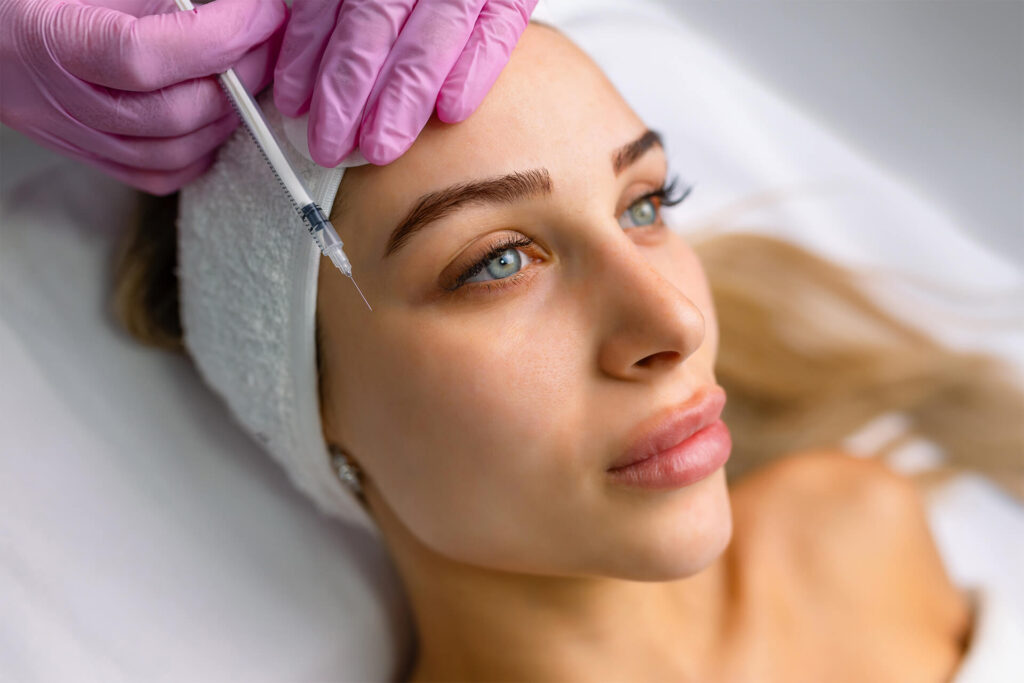
Botox is an injectable medicine that has been used since the 1970s to treat certain medical conditions. It is also widely known for reducing fine lines and wrinkles; it can treat several medical conditions when used appropriately. Botox is the brand name of a neurotoxin made by the bacterium Clostridium botulinum, but other botulinum toxin brands are also available.
What Botox Treats
Botox is used cosmetically and medically. It mainly treats dynamic wrinkles, which develop when facial muscles move during expressions such as frowning, smiling, and squinting. Wrinkles caused by sun damage or gravity do not respond to Botox, but the treatment can soften lines that form from muscle activity. Common cosmetic treatment areas include:
- Glabellar lines between the eyebrows
- Forehead lines
- Crow’s feet around the eyes
- Lines around the mouth
- Chin wrinkles and dimples
Botox also has medical uses. It can treat conditions such as chronic migraine, excessive sweating, overactive bladder, and certain muscle disorders; it can help reduce unwanted muscle contractions when they contribute to symptoms.
How Botox Works
Botox works by blocking nerve signals that cause muscles to contract. The treated muscle stays relaxed; the skin above it becomes smoother as muscle activity decreases. Because the treatment affects nerve-to-muscle signaling, it can reduce the appearance of wrinkles that develop from repeated facial movements.
Botulinum neurotoxin has seven serotypes, but two are used for cosmetic and medical purposes. Serotype A is mainly used for wrinkles and fine lines, while serotype B is mainly used for muscle spasms; both affect the signals involved in muscle contraction.
What to Expect
A Botox treatment uses a very fine needle; each injection takes about a minute or two. The provider cleans the skin and may numb the treatment area if needed, while the number of injections depends on the areas being treated. Most people experience only minor discomfort, such as a pinch or sting, and the procedure usually takes only a short time.
After treatment, patients should avoid lying down for three to four hours and should not rub or massage the treated area for about 24 hours. These steps help limit movement of the injected medication, and following the recommended aftercare can support the treatment process.
Results can begin to appear within one to seven days, but the full effect can take up to two weeks. The effects generally last about three to six months; the duration can vary based on the treatment area and individual response. Side effects are usually temporary. Bruising, swelling, redness, soreness, and flu-like symptoms can occur after injections, as can headaches, nausea, dry mouth, and temporary muscle paralysis near the injection site.
Schedule a Consultation
A consultation allows a provider to review the treatment areas and discuss whether Botox is appropriate. The provider can explain how the injections work; they can discuss expected results based on the areas being treated. Botox is generally considered safe and well tolerated, but side effects can occur, so patients should contact their provider if symptoms develop after treatment. Schedule your first consultation today by contacting a specialist in your area.
