


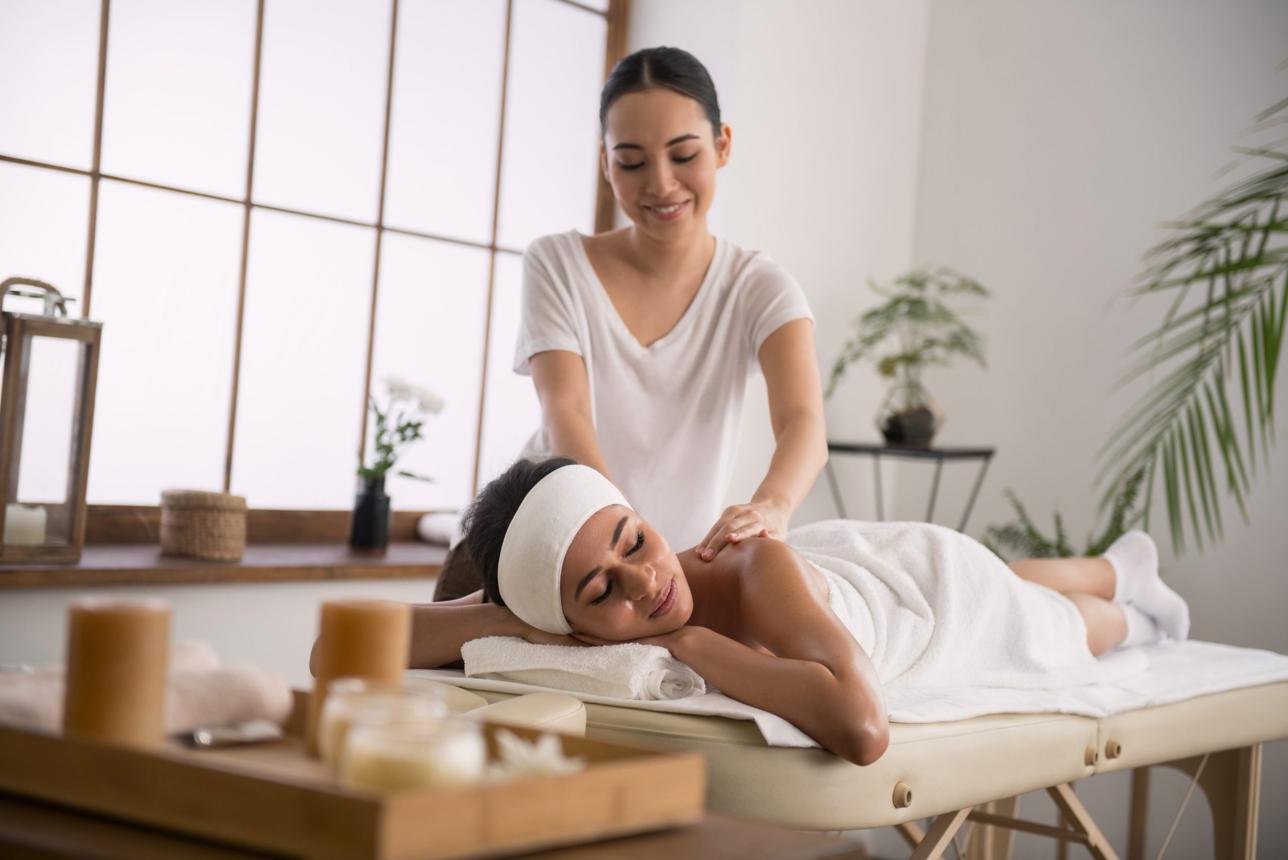
Massage is a tool for improving overall wellness. Masseuses use techniques such as pressure, stretching, and soft-tissue manipulation to affect blood and lymph circulation and relieve muscle tension. Different massage methods work in varying ways, and the masseuse selects techniques based on your specific goals. Here is more information on the role of massage in circulation, flexibility, and mobility:
Body System Stimulation
Some massage approaches use targeted touch for specific physical effects. Reflexology focuses on the hands and feet, applying pressure to defined points on these areas to affect local tissues and related body systems. Other methods use tools and scraping techniques to influence circulation and tissue function. Gua sha uses a smooth-edged tool to apply firm, repeated strokes across the skin. These strokes affect blood flow in the treated area and help reduce muscle tightness and surface stiffness. Trained practitioners perform this technique, adjusting pressure and direction as needed.
Contrast therapy alternates sauna sessions with cold plunges to expose the body to temperature changes. Heat expands surface blood vessels and increases blood flow, while cold narrows them and shifts blood inward. Repeated cycles cause blood vessels to alternate between widening and narrowing and move fluid between surface and deeper tissues.
Mobility and Flexibility Development
Some bodywork approaches use guided movement to work on flexibility. Thai stretch involves assisted positioning and movement of the body to move joints and lengthen muscles. It increases your range of motion in specific areas and reduces muscle resistance to movement. Practitioners adjust stretches to the individual’s mobility limits and use a step-by-step sequence to increase joint movement and muscle length over time. Massage experts also make sure that each movement feels comfortable and pain-free, allowing for a controlled, relaxed stretch.
Muscle Tightness Reduction
Massage includes techniques that address muscle tightness. Ashiatsu uses broad, sustained pressure delivered with the practitioner’s feet. The method targets large muscle groups and reaches dense soft tissue. Practitioners support body weight with overhead bars or rails and apply controlled foot strokes across areas of tightness. This approach distributes pressure across broader regions rather than isolated points.
Other manual techniques also address muscle tension. Deep tissue massage applies sustained pressure to deeper muscle and connective tissue layers to work through areas of localized tightness. Swedish massage uses lighter, gliding strokes over surface muscles to address general tension across broader regions. Practitioners often combine methods to address both superficial and deeper muscle tightness, depending on the presentation and treatment focus.
Some sessions integrate multiple techniques within a single treatment. Practitioners adjust pressure, stroke depth, and contact area based on muscle response during the session. This approach allows attention to both broad and localized tightness without switching between separate modalities.
Range of Motion Restoration
Mobility and flexibility are closely intertwined, and practitioners use similar massage techniques for both, such as assisted stretching and soft tissue work around joints. Other options, such as private sauna sessions and mat-based movement work like guided stretching or floor exercises, extend focus from immediate session effects to longer-term movement practice. Treatment setting and technique selection shape how session-based changes carry into daily movement. Massage therapists adjust pressure, positioning, and sequencing based on joint range and muscle response.
Explore Massage Therapy Options
Therapists often tailor massage programs by adjusting techniques and session length based on tissue sensitivity, injury history, and range of motion. Personalized sessions tend to produce more reliable improvements than one-size-fits-all treatments. Some facilities also offer paired or couples sessions in which two people receive coordinated care, with each massage tailored to the individuals’ needs. Book a consultation with a reputable spa today to explore the benefits of massage on circulation and mobility.
