


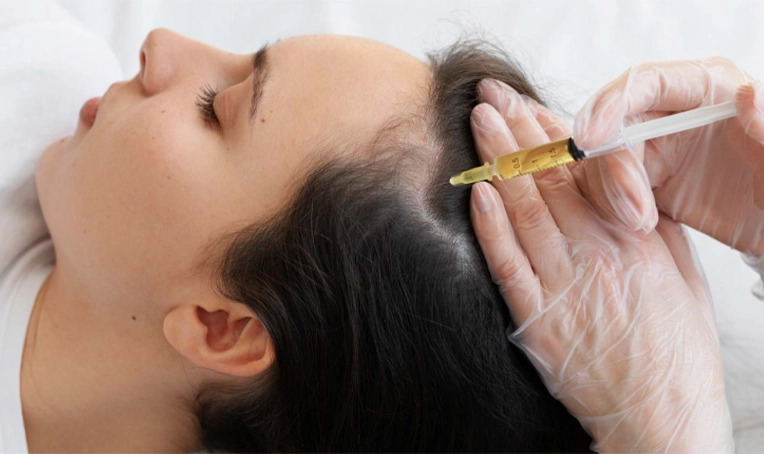
Platelet-rich plasma (PRP) is a treatment that uses your own blood to address thinning hair. A provider draws a small sample, spins it in a centrifuge, and injects the concentrated plasma into your scalp. The process is complex, but the appointment is straightforward. People may ask questions about PRP for hair loss, so here are some answers:
How Does PRP Work?
Your blood contains platelets, and those platelets hold growth factors that support tissue repair. A technician separates the plasma so the platelet count rises above normal levels. After that step, the concentrated sample goes back into targeted areas of your scalp.
Growth factors interact with hair follicles at the injection sites when you get PRP for hair loss. Some follicles enter a more active phase, and the surrounding tissue receives added nutrients. Since the plasma comes from your own body, allergic reactions stay rare. The science continues to develop, so providers track each case individually.
Do I Qualify For This?
Good candidates usually show early or moderate thinning rather than complete baldness. A consultation helps your provider review your history, and it gives you a chance to ask questions. If follicles remain present, PRP may be an option worth discussing.
Certain factors affect eligibility, so your provider will screen for them during your visit. You might not qualify if specific conditions apply to you. The following list covers common points that come up in a review:
- Active scalp infections or skin conditions
- Current blood disorders or certain medications
- Recent use of blood thinners
Your provider weighs these details before recommending a plan. As every scalp differs, your assessment stays personal to you. A short medical questionnaire speeds up the process, and honest answers help the team guide you.
When Do Results Show Up?
Patience matters with this treatment, since hair grows slowly by nature. Most people notice changes over several months rather than days. Early signs might include reduced shedding before new growth appears.
Timelines vary from person to person, and no single outcome fits everyone. Your provider tracks your progress with photos at each visit, which makes changes easier to spot. Consistency with your scheduled appointments plays a role in what you observe.
Timing depends on your specific plan, and clarity helps you prepare. A clear estimate lets you prepare in advance. Request a written summary so you have the details on hand.
How Many Sessions Are Needed?
Most protocols start with a series of treatments spaced a few weeks apart. Your provider sets the exact number after reviewing your scalp, and the plan adjusts as needed. A typical starting series looks like this:
- Several initial sessions
- Spacing of four to six weeks between visits
- Maintenance appointments every few months
These numbers offer a general guide, though your plan may differ. Since response varies, some people need more sessions than others. Your provider explains the reasoning during your consultation, so you know what to expect. Ask about scheduling early if your calendar fills quickly.
Schedule PRP for Hair Loss
PRP for hair loss draws steady interest, and clear information helps you make a confident choice. Since every case differs, a consultation gives you the specifics you need. Book your consultation today, and a medical team can walk you through the next steps. Reach out by phone, email, or our online form to reserve a time.
