


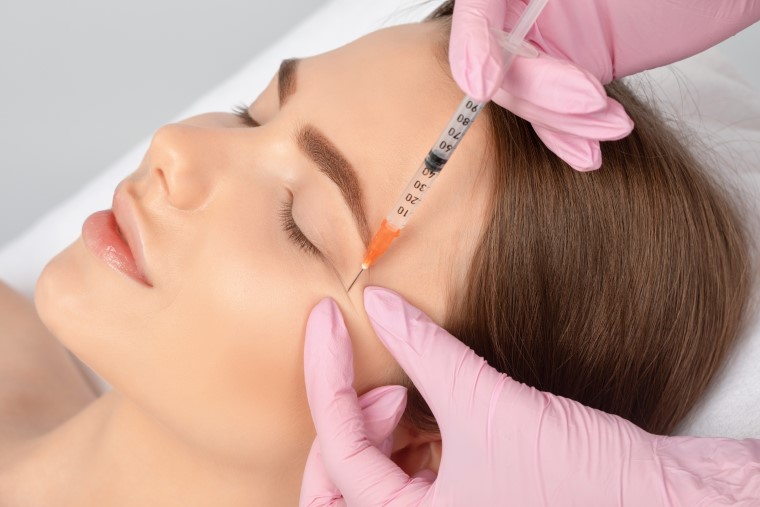
Cosmetic injectables are widely used in aesthetic dermatology to address various signs of facial aging and changes in skin appearance. These treatments help improve the appearance of wrinkles, restore facial volume, and enhance specific facial features without surgical procedures. A healthcare provider evaluates each patient’s goals and skin concerns to recommend appropriate treatment options. Here is more information about cosmetic injectables:
Types of Injectables
Cosmetic injectables include different treatment options designed to address changes in facial appearance, volume, and skin texture. The two main categories are neurotoxins and dermal fillers, and a provider selects options based on each patient’s goals and needs.
- Neurotoxins: Relax targeted facial muscles to improve the appearance of lines and wrinkles. Options often include Botox®, Daxxify®, Dysport®, and Xeomin®.
- Dermal fillers: Add volume to areas affected by facial aging or volume loss. Options often include Belotero®, Juvederm®, Radiesse®, Restylane®, RHA®, Sculptra®, and Skinvive™.
- Customized treatments: A provider evaluates skin concerns, medical history, and aesthetic goals to recommend an appropriate injectable option.
Each cosmetic injectable serves a different purpose, and treatment plans are personalized based on the patient’s desired results and overall skin health.
Benefits of Cosmetic Injectables
Injectables provide a minimally invasive option for patients seeking aesthetic improvements without surgical procedures. These treatments may offer benefits such as shorter appointment times, minimal downtime, and personalized results based on each patient’s goals and facial features. A provider evaluates individual concerns and recommends an appropriate treatment approach based on skin needs and desired outcomes.
Steps of Injectable Treatment
A cosmetic injectable appointment follows a structured approach designed around each patient’s treatment goals. The provider begins by preparing the treatment area and may apply a topical anesthetic to improve comfort during the procedure. The specialist then administers injections based on the areas being treated and the patient’s desired outcome.
Cosmetic injectable sessions are typically completed during an office visit. Providers use their knowledge of facial anatomy and treatment techniques to determine injection placement. Each treatment plan is customized to address the patient’s specific concerns and aesthetic goals.
Recovery After Injectables
After cosmetic injectable treatments, patients may experience temporary tenderness, redness, or swelling in the treated area. These effects typically improve over time, and providers are able to recommend specific aftercare instructions to support recovery. Results vary depending on the type of injectable used, with Botox® and dermal fillers having different durations of effect. A provider can discuss expected results and recommend follow-up appointments based on each patient’s treatment plan.
Selection of Cosmetic Injectables
A dermatologist selects cosmetic injectables based on each patient’s skin concerns, treatment goals, and overall health. Providers may use neurotoxins to address dynamic wrinkles caused by facial muscle movement. They are able to recommend dermal fillers for concerns related to volume loss or changes in facial contours.
A board-certified dermatologist evaluates the patient’s skin, medical history, and desired results before creating a treatment plan. Some patients benefit from a combination of injectable treatments based on their individual needs. A personalized approach helps providers determine the most appropriate options for each patient.
Schedule an Appointment Today
Cosmetic injectables are minimally invasive treatments that help address signs of aging, restore volume, and enhance facial contours. Options such as Botox® and dermal fillers are selected based on each patient’s skin concerns and aesthetic goals. A board-certified dermatologist is able to evaluate your needs and discuss available treatment options. Schedule an evaluation with a dermatologist today to explore which cosmetic injectables could be right for you.
