

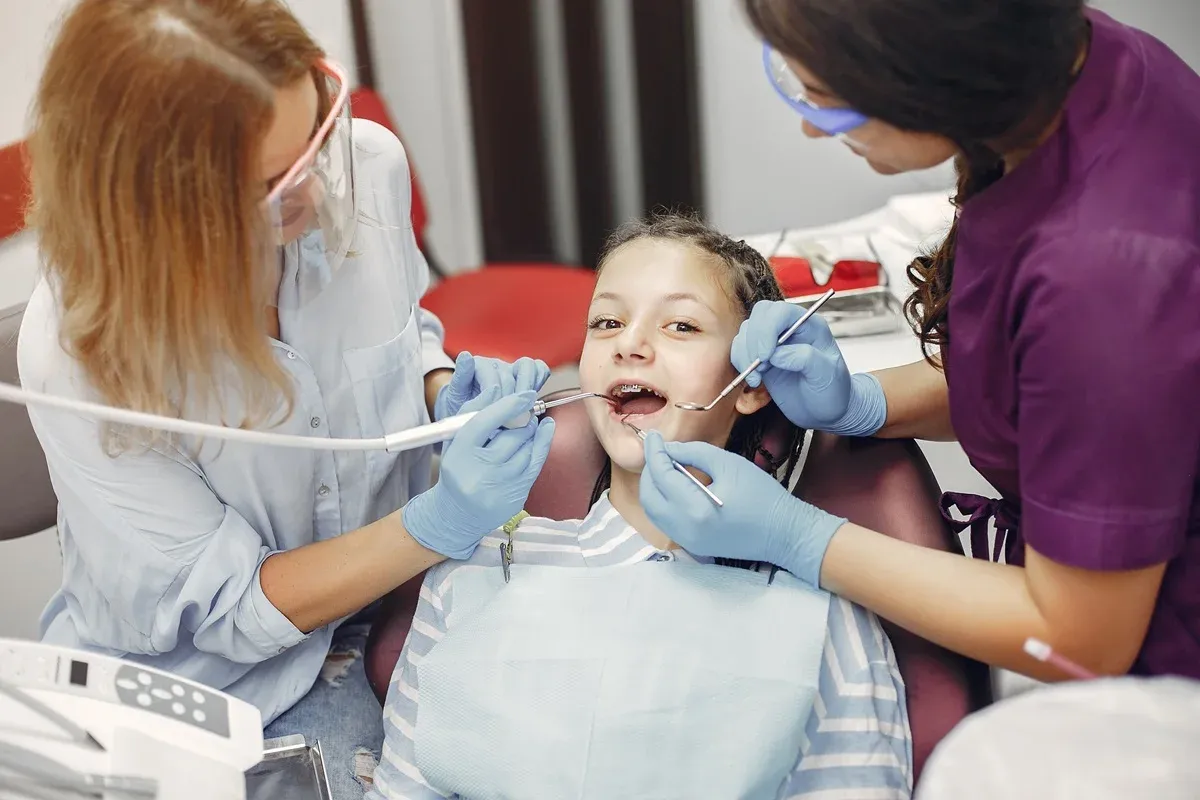
Early orthodontic concerns may affect a child’s bite, jaw development, speech, and ability to clean their teeth properly. Children’s orthodontics helps identify issues such as crowded teeth, gaps, and uneven jaw alignment before they become more complex. Here are several signs that your child may need orthodontic treatment:
Monitoring Tooth Development
Tooth development follows a general timeline in children’s orthodontics, though every child progresses at a slightly different pace. Baby teeth usually fall out in a predictable order, and adult teeth take their place; when this sequence changes noticeably, it signals a developmental concern. Early or late loss of baby teeth often affects how the adult teeth settle into position. If teeth arrive far ahead of schedule or lag well behind, an orthodontist can review the pattern and explain what it means.
Crowded or widely spaced teeth also reflect how development is unfolding. Some crowding is normal, but persistent overlap can suggest limited room in the jaw, and gaps may indicate size differences between teeth. These observations are fundamental clues that help specialists accurately assess your child.
Noticing Alignment Problems
Alignment problems become easier to detect as adult teeth grow in. You may notice teeth that twist, tilt, or sit out of line with their neighbors; these patterns often stand out during smiles or meals. Here are several alignment issues that appear frequently in children around this age:
- Crooked teeth: Teeth that rotate or lean can affect how the smile looks and how easily your child cleans between them.
- Protruding front teeth: Upper teeth that extend well past the lower ones may be more prone to injury during play.
- Noticeable gaps: Wide spaces between teeth sometimes indicate missing teeth or uneven growth.
- Overlapping teeth: Teeth that crowd together can trap food and make brushing harder.
These signs do not always require immediate action, but they are worth noting and sharing with an orthodontist.
Recognizing Bite and Jaw Issues
The way upper and lower teeth meet reveals a great deal about jaw development. A healthy bite allows teeth to fit together comfortably, and problems in this area often show up during chewing or speaking. Observing how your child’s jaws align gives you useful clues.
An overbite occurs when upper teeth cover the lower teeth too much, while an underbite happens when lower teeth sit ahead of the upper ones. A crossbite, where some upper teeth close inside the lower teeth, can affect one side or both. Each pattern influences how the jaw grows, so early recognition matters. Jaw shifts and sounds also deserve attention. If your child’s jaw moves to one side when biting down, or if you hear clicking during chewing, these may reflect an uneven bite.
Observing Functional Difficulties
Beyond appearance, everyday habits often reveal issues with children’s orthodontics. Watch how your child eats, speaks, and breathes, because these functions depend on well-positioned teeth and jaws. Here are several functional difficulties that point toward the need for an evaluation:
- Trouble chewing: Difficulty biting into or grinding food may signal a bite that does not meet properly.
- Speech changes: Certain sounds become harder to produce when the teeth or jaw are out of position.
- Mouth breathing: Consistent mouth breathing can affect how the upper jaw develops.
- Thumb sucking: Prolonged habits may shift tooth position over time.
These behaviors are worth tracking, and sharing them with a specialist supports a thorough assessment.
Schedule Your Children’s Orthodontics Consultation
Watching your child’s tooth development, alignment, bite, and daily functions gives you a strong foundation for identifying potential concerns early. The signs, including crowded teeth and chewing trouble, help you decide when professional input is helpful. Early observation puts you in a better position to act at the right time. Contact a qualified orthodontist in your area to schedule your children’s orthodontics consultation today.
