


Introduction
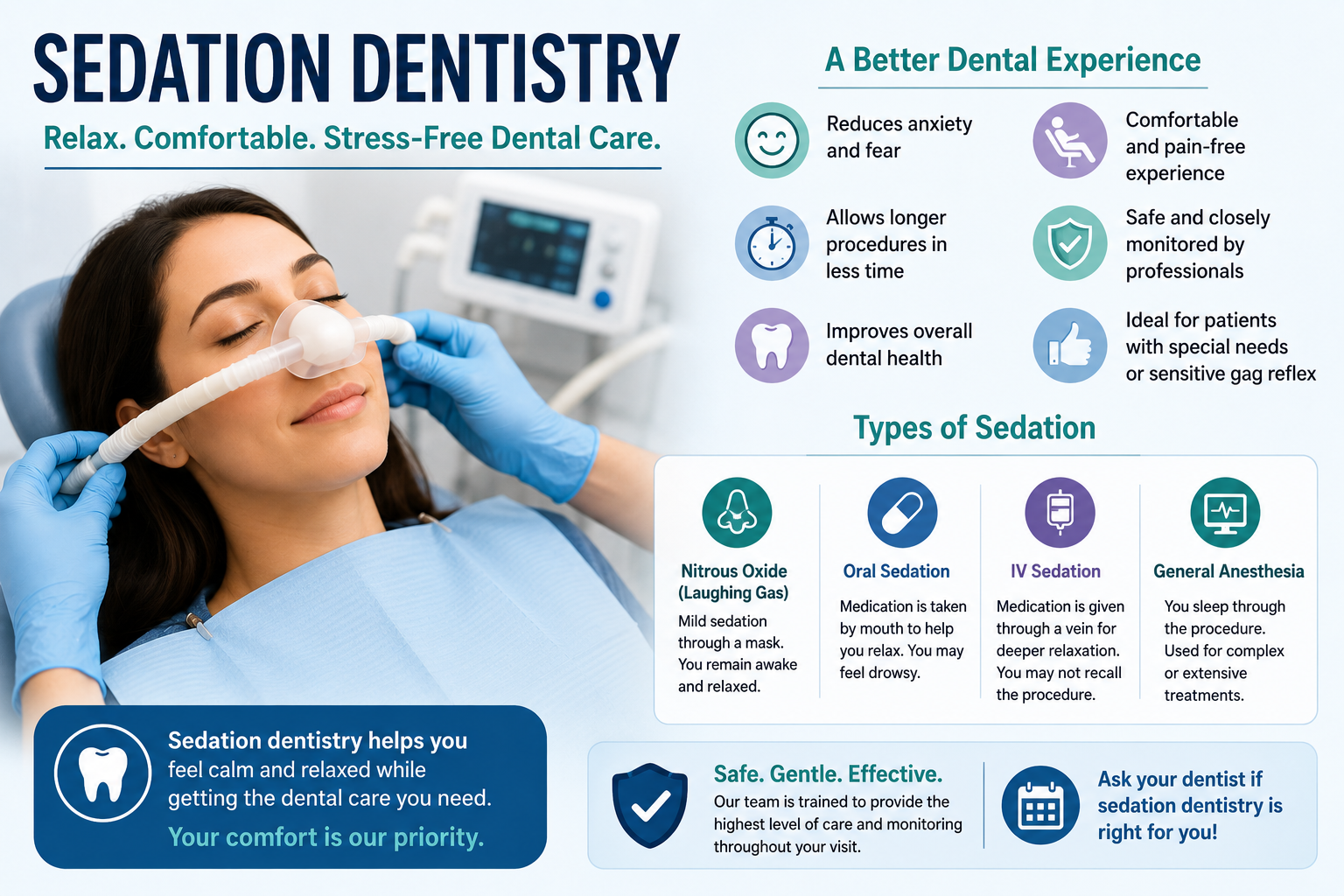
Sedation dentistry has transformed the way many people experience dental treatment by providing a calmer, more comfortable, and less stressful environment. For individuals who experience dental anxiety, fear of needles, a sensitive gag reflex, or difficulty sitting through long procedures, sedation techniques can make visiting the dentist much easier.
Modern sedation dentistry uses carefully controlled medications to help patients feel relaxed during dental procedures. Depending on the type of sedation used, patients may remain awake and comfortable or, in some cases, sleep through parts of their treatment.
This article explores the benefits, types, procedures, safety, and important considerations of sedation dentistry.
What Is Sedation Dentistry?
Sedation dentistry involves the use of medications to help patients relax during dental procedures. It is sometimes called “sleep dentistry,” although most forms of sedation allow patients to remain conscious and responsive.
Dentists use sedation to improve patient comfort during treatments such as:
- Tooth extractions.
- Root canal therapy.
- Dental implants.
- Gum treatments.
- Cosmetic dentistry procedures.
- Deep cleaning.
- Complex restorative work.
The level of sedation depends on the patient’s needs, medical history, and the type of dental treatment being performed.
Types of Sedation Dentistry
1. Nitrous Oxide Sedation (Laughing Gas)
Nitrous oxide is one of the most common forms of sedation dentistry. It is delivered through a small mask placed over the nose.
Benefits include:
- Quick relaxation.
- Reduced anxiety.
- Fast recovery.
- Ability to drive home in many cases after the dentist confirms it is safe.
The effects usually wear off shortly after the gas is stopped.
2. Oral Conscious Sedation
Oral sedation involves taking a prescribed medication before the dental appointment.
Patients may feel:
- Relaxed.
- Drowsy.
- Less aware of time.
Although patients usually remain awake, they may have little memory of the procedure. Someone may need to accompany them home depending on the medication used.
3. Intravenous (IV) Sedation
IV sedation is administered through a vein, allowing the dentist to control the level of sedation throughout the procedure.
Benefits include:
- Faster effects.
- Deeper relaxation.
- Adjustable sedation levels.
- Greater comfort during longer procedures.
Patients usually need transportation home after receiving IV sedation.
4. General Anesthesia
General anesthesia causes complete unconsciousness and is typically used for complex procedures or special medical situations.
It may be recommended for:
- Extensive oral surgeries.
- Certain patients with severe dental anxiety.
- Some patients with special healthcare needs.
General anesthesia requires careful monitoring by trained professionals.
Who Can Benefit From Sedation Dentistry?
Many people can benefit from sedation dentistry, including those who have:
- Severe dental fear or anxiety.
- A low pain tolerance.
- Very sensitive teeth.
- A strong gag reflex.
- Difficulty sitting still for long periods.
- Multiple dental treatments required in one visit.
- Previous traumatic dental experiences.
Sedation allows these patients to receive necessary oral care without overwhelming stress.
Benefits of Sedation Dentistry
Reduces Dental Anxiety
One of the biggest advantages of sedation dentistry is helping patients feel calm and relaxed during treatment.
Makes Long Procedures More Comfortable
Complex dental treatments can take several hours. Sedation can make the experience feel shorter and more manageable.
Helps Patients With Special Needs
Some individuals with physical, developmental, or emotional challenges may find dental visits easier with appropriate sedation.
Improves Overall Dental Health
When fear prevents people from visiting the dentist, oral health problems can worsen. Sedation helps patients receive regular care and prevent serious issues.
Is Sedation Dentistry Safe?
Sedation dentistry is generally considered safe when performed by trained dental professionals who review the patient’s medical history and monitor them during treatment.
Before recommending sedation, the dentist will consider:
- Age.
- Medical conditions.
- Current medications.
- Allergies.
- Previous reactions to sedation.
Following all instructions before and after the procedure helps improve safety.
Preparing for a Sedation Dentistry Appointment
Preparation instructions vary depending on the type of sedation used.
Your dentist may advise you to:
- Avoid eating or drinking for a certain period before the appointment.
- Wear comfortable clothing.
- Arrange transportation if required.
- Inform the dental team about all medications and health conditions.
- Follow all pre-treatment instructions carefully.
Proper preparation ensures a smoother and safer experience.
What Happens During Sedation Dentistry?
The general process includes:
1. Consultation
The dentist reviews your dental needs, health history, and discusses the most suitable sedation option.
2. Administration of Sedation
The chosen sedation method is provided, and your comfort level is monitored.
3. Dental Treatment
The procedure is performed while you remain relaxed and comfortable.
4. Recovery
Recovery time depends on the type of sedation used. Some methods wear off quickly, while others require several hours of rest.
Possible Side Effects of Sedation Dentistry
Although uncommon, some patients may experience temporary effects such as:
- Drowsiness.
- Dry mouth.
- Headache.
- Mild nausea.
- Temporary confusion or memory loss.
Most side effects disappear as the medication leaves the body.
Sedation Dentistry for Children
Pediatric sedation dentistry may be recommended for children who experience extreme anxiety, have difficulty cooperating during treatment, or require extensive dental procedures.
Dentists carefully evaluate the child’s health, age, and specific needs before recommending sedation.
Parents should discuss the risks, benefits, and alternatives with a qualified pediatric dentist.
Common Dental Procedures That Use Sedation
Sedation can be used for many treatments, including:
- Wisdom tooth removal.
- Dental implants.
- Crowns and bridges.
- Periodontal procedures.
- Tooth extractions.
- Cosmetic dental work.
- Extensive restorations.
The appropriate sedation method depends on the complexity of the procedure and patient comfort level.
Choosing the Right Sedation Dentist
When selecting a sedation dentistry provider, consider:
Experience and Qualifications
Choose a dentist trained and certified to provide sedation services.
Reviews and Reputation
Read patient testimonials and check the clinic’s reputation.
Safety Standards
Ensure the dental office follows proper monitoring and emergency safety procedures.
Communication
A good dentist will answer your questions and explain the treatment process clearly.
The Future of Sedation Dentistry
Dental technology continues to improve patient comfort. Modern sedation methods, advanced monitoring equipment, and improved treatment techniques make dental procedures safer and less stressful than ever before.
More dental clinics are adopting patient-focused approaches that combine comfort, technology, and personalized care.
Conclusion
Sedation dentistry provides a valuable solution for patients who fear dental treatment or require comfortable care during complex procedures. Through options such as nitrous oxide, oral sedation, IV sedation, and general anesthesia, dentists can create a relaxing environment that allows patients to receive essential oral healthcare.
If dental anxiety has prevented you from seeking treatment, speaking with a qualified sedation dentist can help you explore safe and effective options for a more comfortable dental experience.
