


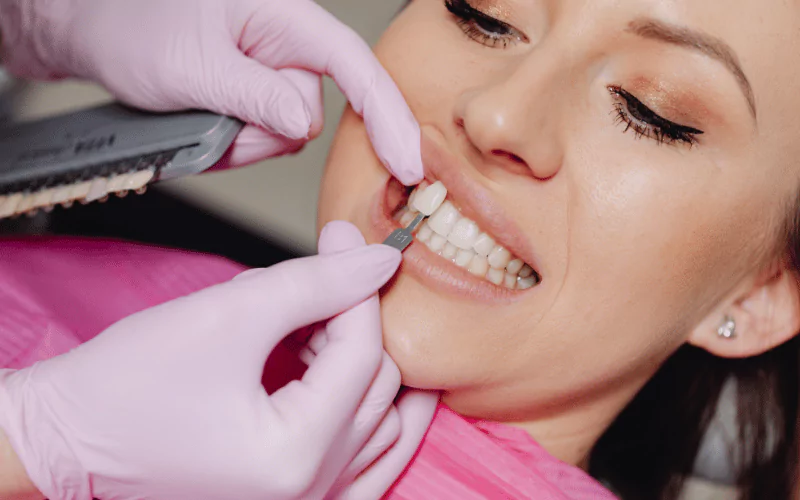
Cosmetic dentistry includes dental treatments designed to improve the color, shape, size, alignment, and overall appearance of the teeth and smile. Depending on a patient’s needs, these services may address discoloration, chips, gaps, uneven teeth, or missing teeth. Here are some common procedures included in cosmetic dentistry:
Brightening Discolored Teeth
Teeth can lose their brightness over time, and coffee, tea, soda, and certain foods often contribute to staining. Whitening treatment is a cosmetic dentistry service that dentists offer both in the office and as take-home kits. In-office whitening uses a stronger solution and a controlled process, while at-home kits work gradually over several days. Here are a few factors that affect how well whitening works for you:
- Type of stain: Surface stains from food and drinks tend to respond well, whereas deeper stains within the tooth may require different approaches.
- Starting shade: Your natural tooth color influences the final result.
- Habits: Ongoing coffee or tobacco use can influence how long results last.
These details can help you set realistic expectations before you begin. A dentist examines your teeth and recommends the method that aligns with your situation.
Repairing Tooth Imperfections
Chips, cracks, and small gaps can change the shape and symmetry of your smile, and several cosmetic dentistry treatments address these issues. Dental bonding uses a tooth-colored material that a dentist shapes onto the tooth, and it works well for minor repairs. Veneers, which are thin shells placed over the front of teeth, cover a wider range of imperfections. The right choice depends on the size of the problem. Bonding usually takes a single visit, while veneers require more preparation and time. A dentist reviews your teeth, discusses your goals, and explains which option suits your needs.
Balancing Smile Alignment
Crooked or crowded teeth can affect how balanced your smile appears, and modern cosmetic dentistry offers several ways to straighten them. Clear aligners are removable and less noticeable than traditional braces. Traditional braces remain a reliable option for more complex alignment concerns, and they work steadily over time. Here are a few points to review:
- Treatment length: Simple cases may finish in months, while others take longer.
- Daily routine: Clear aligners require consistent wear, and you must remove them when eating.
- Maintenance: Braces require careful cleaning around the wires and brackets.
A consultation with your dentist can help determine which method best suits your teeth and lifestyle.
Replacing Missing Teeth
Missing teeth can affect both the completeness of your smile and how you chew or speak; cosmetic dentistry provides ways to fill these spaces. Dental implants, which are posts placed into the jaw that hold a replacement tooth, offer a fixed and long-lasting solution. Bridges and partial dentures are alternatives that suit people who prefer a different approach or have specific needs. Each option has its own timeline and process. Implants involve several steps and a healing period, while bridges attach to nearby teeth and take less time. Your dentist can assess your jaw, remaining teeth, and goals to recommend a suitable replacement.
Book Your Cosmetic Dentistry Appointment
Cosmetic dental care comprises treatments that brighten discolored teeth, repair imperfections, balance alignment, and replace missing teeth. Each targets a specific concern, and the right choice depends on your goals and your teeth’s condition. Contact a qualified dentist to book your cosmetic dentistry appointment today.
