


Introduction
Interventional cardiology is one of the highest-paying specialties in modern medicine. Interventional cardiologists perform advanced catheter-based procedures to diagnose and treat heart and blood vessel diseases, including angioplasty, stent placement, and other minimally invasive cardiac treatments.
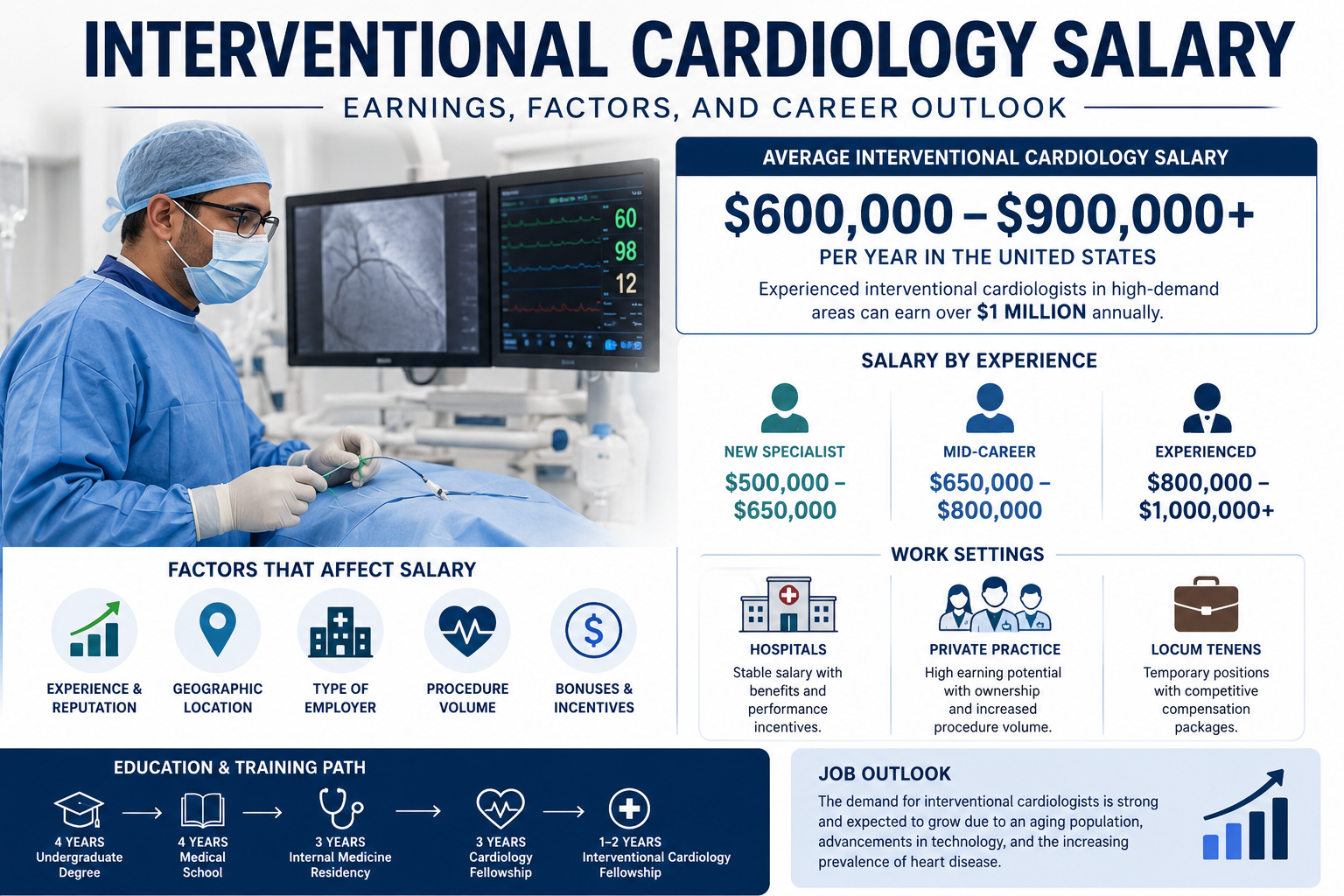
Because of the extensive education, specialized training, long working hours, and high level of responsibility, the interventional cardiology salary is among the highest in the healthcare industry. In the United States, many interventional cardiologists earn between $600,000 and $900,000 per year, while experienced physicians in high-demand locations may earn $1 million or more annually.
This article explores average salaries, factors that affect earnings, career pathways, and the future earning potential in this specialized field.
What Is Interventional Cardiology?
Interventional cardiology is a subspecialty of cardiology that focuses on treating cardiovascular conditions using minimally invasive procedures performed through catheters rather than traditional open-heart surgery.
Common procedures include:
- Coronary angioplasty.
- Coronary stent placement.
- Cardiac catheterization.
- Peripheral vascular interventions.
- Structural heart procedures.
These procedures help restore blood flow, reduce symptoms, and improve the quality of life for patients with heart disease.
Average Interventional Cardiology Salary
The interventional cardiology salary varies based on experience, location, employer type, and procedure volume.
Recent compensation reports show that interventional cardiologists commonly earn around $700,000 to $770,000 annually on average, with median compensation around $745,000 in some datasets.
Typical Salary Range
| Experience Level | Estimated Annual Salary |
|---|---|
| New interventional cardiologist | $500,000 – $650,000 |
| Mid-career specialist | $650,000 – $800,000 |
| Experienced cardiologist | $800,000 – $1,000,000+ |
Income can increase further through productivity bonuses, private practice ownership, and performing a high number of complex procedures.
Factors That Affect Interventional Cardiology Salary
1. Experience and Reputation
Like most medical professions, experience has a major impact on earnings. A newly trained physician usually earns less than a cardiologist with years of successful procedures and a strong professional reputation.
Highly experienced interventional cardiologists may receive higher base salaries, performance bonuses, and leadership opportunities.
2. Geographic Location
Location significantly affects compensation.
Areas with:
- High demand for cardiologists.
- Fewer available specialists.
- Rural or underserved communities.
- Large hospital systems.
often offer more competitive compensation packages.
3. Type of Employer
The workplace also influences the interventional cardiology salary.
Hospitals and Healthcare Systems
Many cardiologists work for hospitals and receive:
- Competitive salaries.
- Performance incentives.
- Health insurance.
- Retirement benefits.
- Paid leave.
Private Practice
Private practice can provide some of the highest earning opportunities because physicians may benefit from ownership and higher procedural volume.
Academic Medicine
University hospitals usually provide lower salaries compared with private practice but offer opportunities for teaching, research, and leadership.
4. Number of Procedures Performed
Interventional cardiologists often receive productivity-based compensation.
Higher procedure volume can lead to:
- Larger annual bonuses.
- Higher total compensation.
- Increased professional recognition.
Complex procedures generally generate higher reimbursement and may contribute to greater earnings.
Interventional Cardiologist Salary by Work Setting
Private Practice
Private practice interventional cardiologists can often earn some of the highest incomes, especially when they have an established patient base and high procedure volume.
Hospital Employment
Hospital-employed physicians usually receive stable salaries, bonuses, and comprehensive benefit packages.
Locum Tenens
Temporary or contract interventional cardiologists can also earn high compensation because of the demand for specialized heart care. Some positions offer annualized earnings approaching or exceeding traditional full-time salaries.
Education and Training Required
Becoming an interventional cardiologist requires many years of education and training:
- Bachelor’s degree – 4 years.
- Medical school – 4 years.
- Internal medicine residency – 3 years.
- General cardiology fellowship – 3 years.
- Interventional cardiology fellowship – 1–2 years.
In total, the journey may require approximately 15 years or more of education and clinical training after high school.
Job Outlook for Interventional Cardiologists
The demand for heart specialists remains strong due to:
- An aging population.
- Increased rates of cardiovascular disease.
- Advances in minimally invasive treatments.
- Growing need for specialized cardiac procedures.
Many hospitals and medical organizations actively recruit interventional cardiologists, often offering attractive salary packages and signing bonuses.
Benefits Beyond Salary
An interventional cardiologist’s compensation package may include:
- Annual performance bonuses.
- Signing bonuses.
- Relocation assistance.
- Health insurance.
- Retirement plans.
- Continuing medical education support.
- Paid vacation.
These additional benefits can add significant value beyond the base salary.
Challenges of a High-Paying Career
Although the interventional cardiology salary is impressive, the profession comes with significant challenges:
- Long and unpredictable working hours.
- Emergency call responsibilities.
- High-pressure decision-making.
- Physically demanding procedures.
- Continuous medical education requirements.
Successful cardiologists must balance financial rewards with professional responsibilities.
Interventional Cardiology Salary Compared to Other Specialties
Compared with many medical fields, interventional cardiology ranks among the highest-paying specialties.
For example:
- General cardiologists often earn lower compensation.
- Primary care physicians typically earn significantly less.
- Many surgical and procedural specialties have similar high earning potential.
The additional fellowship training and advanced procedural skills contribute to the higher compensation. Recent surveys have reported median compensation around $750,000 for interventional cardiologists, higher than many other cardiology roles.
Future Trends in Interventional Cardiology Compensation
The future of interventional cardiology salary remains promising because cardiovascular diseases continue to be a major healthcare challenge worldwide.
Future factors affecting income include:
- New cardiac technologies.
- Robotic-assisted procedures.
- Increased demand for minimally invasive treatments.
- Changes in healthcare reimbursement systems.
- Shortages of specialized physicians.
Specialists who adapt to new technologies and maintain high-quality patient outcomes are likely to remain highly valuable.
Conclusion
The interventional cardiology salary reflects the advanced skills, years of training, and responsibility required to treat complex heart conditions. With average earnings often reaching $700,000 or more per year and top professionals earning over $1 million annually, it remains one of the most financially rewarding careers in medicine.
However, the career requires dedication, extensive education, and the ability to manage stressful medical situations. For physicians passionate about cardiovascular medicine and advanced procedures, interventional cardiology offers both professional satisfaction and exceptional earning potential.
