


Introduction
Bible verses about mental health provide comfort, encouragement, and hope for people facing stress, anxiety, fear, sadness, and emotional struggles. The Bible contains many powerful messages about God’s love, peace, strength, and care during difficult moments of life.
While faith can be a meaningful source of support, mental health challenges are real experiences that may also benefit from professional care, counseling, and support from loved ones. Many people find that combining spiritual practices such as prayer and scripture reading with healthy habits and appropriate mental healthcare helps them navigate life’s challenges.
This article explores inspiring Bible verses about mental health, their meanings, and how they can encourage emotional and spiritual well-being.
Why the Bible Offers Comfort During Emotional Struggles
Throughout scripture, many individuals experienced fear, sadness, uncertainty, and hardship. The Bible teaches that people are not alone in their struggles and that God provides comfort and strength.
Reading Bible verses about mental health can help believers:
- Feel a sense of peace and hope.
- Remember God’s presence during challenges.
- Develop patience and resilience.
- Strengthen their faith through difficult times.
- Find encouragement and emotional support.
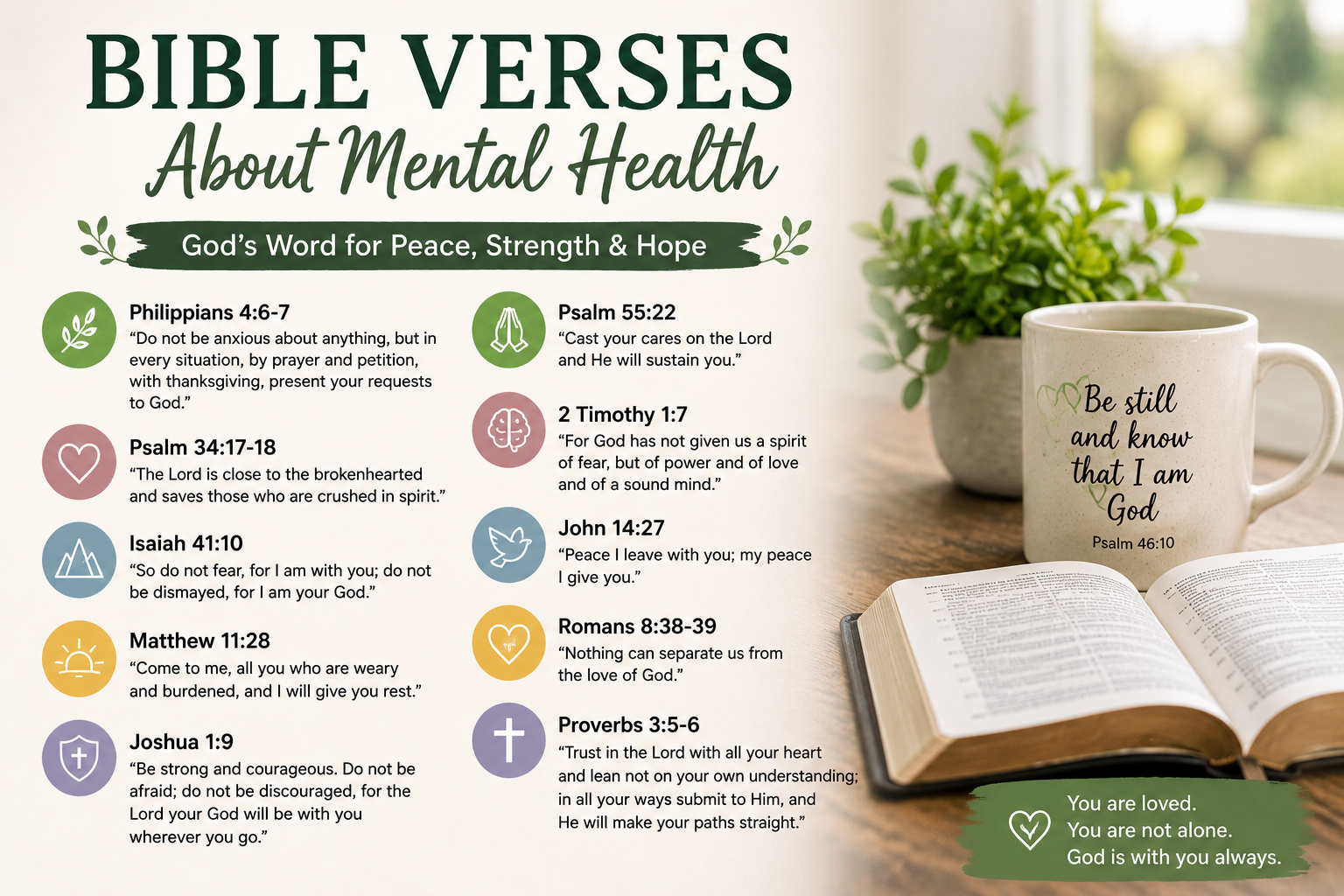
1. Philippians 4:6–7 – Finding Peace Through Prayer
“Do not be anxious about anything, but in every situation, by prayer and petition, with thanksgiving, present your requests to God.”
This well-known passage encourages believers to bring their worries to God through prayer. It reminds us that faith and gratitude can provide a sense of peace during stressful times.
2. Psalm 34:17–18 – God Is Close to the Brokenhearted
“The Lord is close to the brokenhearted and saves those who are crushed in spirit.”
This verse offers comfort to those experiencing sadness, grief, or emotional pain. It emphasizes that God remains near during moments of suffering.
3. Isaiah 41:10 – Strength During Fear
“So do not fear, for I am with you; do not be dismayed, for I am your God.”
Fear and uncertainty can feel overwhelming, but this scripture reminds believers of God’s support and presence.
4. Matthew 11:28 – Rest for the Weary
“Come to me, all you who are weary and burdened, and I will give you rest.”
This verse is often shared with those experiencing emotional exhaustion or overwhelming responsibilities.
5. Joshua 1:9 – Courage and Confidence
“Be strong and courageous. Do not be afraid; do not be discouraged, for the Lord your God will be with you wherever you go.”
This scripture encourages strength and bravery during life’s challenges.
6. Psalm 55:22 – Releasing Your Burdens
“Cast your cares on the Lord and He will sustain you.”
Many people turn to this verse when feeling stressed or overwhelmed, as it highlights trust and reliance on God.
7. 2 Timothy 1:7 – A Spirit of Strength
“For God has not given us a spirit of fear, but of power and of love and of a sound mind.”
This verse reminds believers of the inner strength, wisdom, and love that can guide them through difficult situations.
8. John 14:27 – The Gift of Peace
“Peace I leave with you; my peace I give you.”
Jesus’ words in this passage encourage believers to seek a deep and lasting peace that is not dependent on external circumstances.
9. Romans 8:38–39 – Nothing Can Separate Us From God’s Love
This passage reminds Christians that no hardship, fear, or challenge can separate them from the love of God.
The assurance of unconditional love can provide comfort during emotionally difficult times.
10. Proverbs 3:5–6 – Trusting God’s Guidance
“Trust in the Lord with all your heart and lean not on your own understanding.”
This verse encourages believers to trust God even when life feels confusing or uncertain.
How Prayer Can Support Mental and Emotional Wellness
Prayer can be a meaningful practice that allows people to express their fears, hopes, gratitude, and emotions. Many believers use prayer to find calmness and strengthen their relationship with God.
Healthy spiritual practices may include:
- Daily prayer.
- Reading scripture.
- Meditation on biblical teachings.
- Worship and community involvement.
- Expressing gratitude.
Faith and Professional Mental Health Support
Faith can provide hope and strength, but it does not replace professional mental healthcare when needed. Seeking help from doctors, therapists, or counselors is a responsible and positive step for those facing serious emotional difficulties.
Mental health challenges such as anxiety, depression, or trauma can require professional treatment, just like physical illnesses require medical care.
Creating a Faith-Based Mental Wellness Routine
A balanced routine can support emotional and spiritual health.
Consider:
- Starting the day with prayer.
- Reading encouraging Bible passages.
- Practicing gratitude.
- Spending time with supportive family and friends.
- Exercising and maintaining healthy habits.
- Getting enough sleep.
- Asking for help when needed.
Encouraging Others With Bible Verses
Sharing Bible verses about mental health with friends or family members who are struggling can offer hope and encouragement.
Simple actions such as listening, praying together, offering kindness, and helping someone seek professional support can make a meaningful difference.
The Relationship Between Faith, Hope, and Healing
Faith often helps people develop resilience during challenging periods of life. The Bible consistently teaches messages of love, hope, forgiveness, and renewal.
Many believers find comfort in remembering that difficult moments are temporary and that they can continue moving forward with faith and support.
Conclusion
Bible verses about mental health provide powerful reminders of God’s love, peace, and presence during life’s struggles. Scriptures about courage, hope, and trust can encourage individuals who feel anxious, overwhelmed, or discouraged.
However, caring for mental health may also include seeking professional support, maintaining healthy relationships, and practicing self-care. By combining faith, wisdom, and proper care, individuals can pursue emotional, spiritual, and overall well-being.
Remember, no one has to face their struggles alone—hope, help, and healing are always possible.
